

How to prioritize your mental health—especially when it’s hard to do
Plus: What’s a “biomarker”? + Health tips from student athletes

Welcome to Doing Well! Today:
An interview on physician mental health and stigma
Health news we’ve found useful this week
Word of the week: biomarker
Happy Tuesday. We’re so glad you’re here!
Want to listen instead of read? Download the Substack app to access an audio version of our content.
We Asked: How can we reduce stigma for mental health conditions?
Stigma is a major barrier for mental health care. The term stigma refers to negative attitudes, beliefs, or stereotypes people have about things like mental health conditions. It can make living with those conditions feel isolating, while also delaying or setting back treatment.
As someone who was recently diagnosed with ADHD and OCD, I know how harmful stigma can be. Like many others, I delayed seeking mental health care because I feared the stereotypes and judgment that might arise from a diagnosis.
To learn how to have more open, empathetic conversations about mental health and to recognize when we may need support, we chatted with Dr. Anthony Avellino—an advocate for physician mental health, a neurosurgeon, and president and chief medical officer of the HonorHealth Medical Group. He is also a professor of medicine and associate dean for clinical faculty affairs at ASU’s John Shufeldt School of Medicine and Medical Engineering. He shared the toll of burnout in fields like medicine and lessons he’s learned from his own mental health journey. Our conversation has been edited for length and clarity.
If you’re struggling with mental health, thoughts of suicide, or need someone to talk to, you can call or text 988. Help is available 24/7, for free. You can find additional support and resources with the National Alliance on Mental Illness.
Short on time? Here’s what to know:
One in 5 people struggle with mental health, and suicide is the second leading cause of death for people between 10 and 24 years old. If you’re struggling, you’re not alone, and there are resources that can help.
One way to address stigma in mental health is by increasing awareness. To support someone who’s struggling, know the signs, share resources, and listen.
To perform your best, you have to take care of yourself mentally and physically. When we’re busy, that can be hard to prioritize. Try checking in with yourself regularly, and be honest about how you’re really doing. Are you doing something that brings you joy at least once a week? Are you connecting with your community? If the answer is no, start small—try calling a friend or going on a walk.
To support your mental well-being, try to focus on finding meaning, expressing gratitude, serving others, and not isolating yourself.

Kitana Ford: You’re an advocate for reducing the stigma around mental health and for creating structures that support people’s mental well-being. What brought you to that work?
Anthony M. Avellino: My journey is struggling with depression and OCD. The stresses of life really tipped me over—and in 2009, I tried to take my life. That day, I really hit rock bottom. I vowed that physician wellness and anyone’s wellness is really important, and no one should ever hit rock bottom.
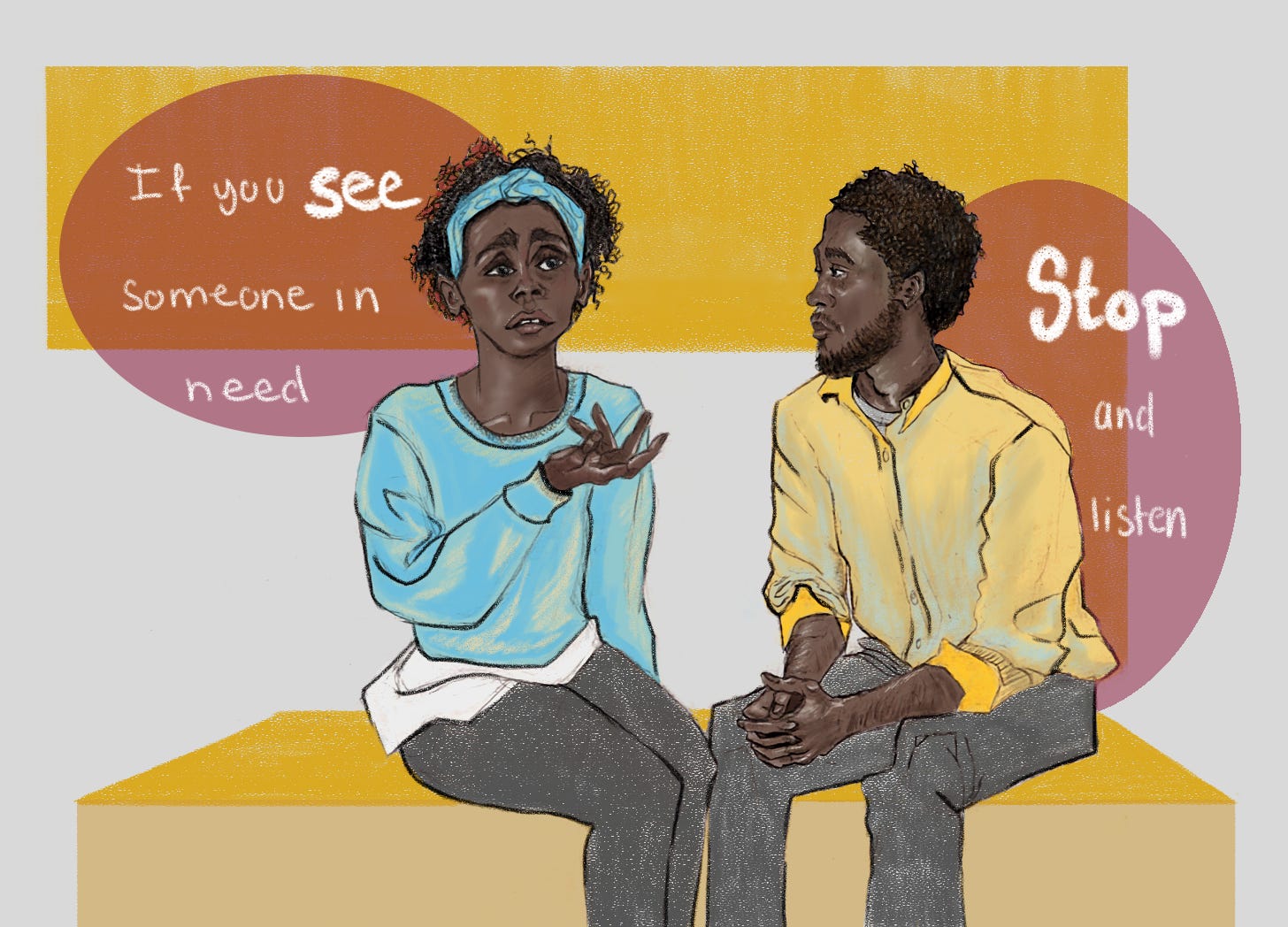
As you go through the journey of life, you have to listen, you have to learn, and you have to heal. Everyone’s story is different, but it’s how you learn from it and how you heal from it. As a community, awareness is really important: What are the signs and symptoms? Letting people know there’s resources available. Listening is very powerful—because if you see someone in need, sitting down, exploring with them, listening to them, and directing them to the appropriate services can help each other find light in the darkest of times.
If you are struggling with your mental health, don’t wait to reach out for help. You can call or text the Suicide & Crisis Lifeline at 988. If you’re supporting a loved one, resources are available through the National Alliance on Mental Illness.
KF: What are the most important things you learned in your personal journey?
AA: Performance equals skill minus interference. In order for us to perform our best, you can have all the skill in the world, but if you can’t block out that interference—if you’re not mentally prepared, not mentally well, not happy and satisfied, not doing purposeful work, not in healthy relationships, not showing compassion toward yourself—it’s difficult to really take care of yourself and perform.
You have to train your body, you have to train your craft, and you have to train your mind. It’s a lot easier said than done, but making sure you’re eating right, exercising, moving, and sleeping. Being a continuous learner and learning from your mistakes.
Step back and pause every three or four weeks and see how things are going: Am I doing things that bring me joy? And I often ask people, Do you do one thing every week that brings you joy?
KF: One of the challenges with mental health and burnout in high-achieving fields is we don’t feel like we can talk about it. What would you say to someone who’s feeling like that?
AA: It’s hard, because there is stigma. It’s really important that we raise awareness, because 1 out of 5 people struggle with this. For those 10 to 24 years of age, suicide is the second leading cause of death.
As a physician, the burnout rate is [around] 40%. We have a lot of people going through tough, tough times. How do you have a community coming together, and how can you learn from each other and support each other to decrease levels of anxiety and stress?
One of things that people miss in the whole wellness or well-being journey is serving others. The sense of gratitude, the sense of serving others is highly protective, because it brings you meaning. Anything that brings one meaning or purpose decreases the level of stress. The other important thing I learned in my journey is when I cycle—even though I’m better now, I still have low days—having meaning, expressing gratitude, but also having the ability not to isolate yourself [helps]. If you’re seeing someone struggling, lend a helping hand and listen.
KF: What excites you most about the future of mental health care?
AA: As a neurosurgeon, I often say what cardiovascular care was the last 30 years is what neuroscience is going to be for the next 30 years. I think in the next 10 years, we’re really going to figure out how the brain works. In health care, we can do heart transplants, liver transplants, and lung transplants. We actually know how the body works—but the brain, especially mental health [and] emotions, we know very little. Now, with a lot of these non-invasive imaging techniques, we’re learning more and more.


Well-Informed: Related stories from the ASU Media Enterprise archives
What does it actually look like to listen actively and with care when someone is struggling with mental health? In this article for State of Mind, a partnership between Slate and ASU that covered mental health, Marisa Russello shares a path to do so. “What most people want is to tell you what they’re going through while you listen calmly,” she writes. “It can help to ask open-ended questions like, ‘How long have you felt this way?’ … If you can’t think of a question, you can always say, ‘Tell me more.’”
Well-Versed: Learning resources to go deeper
Looking for more mental health resources? If you’re in Arizona, ASU’s Counselor Training Center offers free and low cost counseling for students, staff, and those in the community.
If you’re outside Arizona, there may be university or community college clinics in your area—it doesn’t hurt to search!

Well-Read: News we’ve found useful this week
“Stressing over something? These three questions can help,” by Jancee Dunn, May 22, 2026, The New York Times
“How to spot and help someone in a mental health crisis,” by Devi Shastri, April 13, 2026, The Associated Press
“Why I donate blood,” by Abdullah Shihipar, May 9, 2026, Slate
Well-Defined: Word of the week
Biomarkers are biological characteristics that can be measured to give us a picture of what is happening in a cell or organism like the human body. These measurements can help health care providers understand if your body is working as it should, and if you’re ill, they can help assess whether your body is responding to treatment. Some biomarkers can be found in blood, body fluids, and tissues; other biomarkers can come from vitals, such as blood pressure, taken during medical appointments.
You can think of a biomarker like a profile on social media that gives a snapshot of your health; the information it provides your doctors is like the details in your profile. The up-to-date information biomarkers give health care providers about your body help them detect, diagnose, monitor, and predict disease.
Expert review provided by Fang Yu, professor at ASU’s Edson College of Nursing and Health Innovation.
Well-Advised: How Sun Devil athletes take care of their mental health
Athletes know that taking care of their mental health is a key part of performance. We asked ASU athletes how they prioritize mental well-being, even at the busiest times.
“Small, intentional actions throughout the day can make a big difference in overall well-being. Taking a few minutes to step outside for fresh air, staying hydrated, and setting small goals, whether for movement, mindfulness, or nutrition, helps me stay balanced and motivated. It’s not about perfection but about consistency, and those little choices add up to a healthier, happier life. I also make sure to give myself time to rest and reflect, spending time in my Bible, so I can pour into others.”
-Brynn Covell, alumna, ASU Volleyball
“Since I moved away from home I try to call my family as often as possible, especially when life as a student athlete gets a little stressful. Talking to my mom and brother helps me manage stress and take my mind off both school and sports. I think that maintaining relationships with your family, even from a distance, is essential for a good quality of life.”
-Alice Alessandri, ASU Triathlon
Do you have a question or topic you’d like us to ask an expert about? We want to hear from you.