

Do you know the common causes of hearing loss and language delay?
Plus: What does “exposome” mean? + How does access to water affect health?

Welcome to Doing Well. Today:
An interview on speech, language, and hearing
Health news we’ve found useful this week
Word of the week: “exposome”
Do you know how many people in the U.S. have consistent access to clean water?
Happy Tuesday. Let’s get started!
We Asked: How do speech, hearing, and language affect our health?
Did you get hearing screenings in elementary school? At the time you may not have thought about it, but these screenings are a part of a national effort to intervene when support is needed for hearing difficulties.
The health professionals behind this effort are audiologists and speech language pathologists (SLPs)—professionals who work to diagnose and treat communication challenges.
Speech, language, and hearing disorders are common. Around 1 in 10 adults report trouble hearing, and 1 in 12 children aged 3 to 17 has a disorder related to voice, speech, language, or swallowing. These challenges can take many forms—hearing loss or delay; aphasia; stuttering; lisps; communication challenges related to stroke, ALS, autism spectrum disorder, and Parkinson’s; among other examples. Speech and language therapy can help manage many of these conditions.
To better understand the tools we have to support communication throughout our lives and diagnose and treat speech, language, and hearing disorders, we spoke to Victoria Clark, a speech language pathologist and professor at the ASU College of Health Solutions. Our conversation has been edited for length and clarity.
Short on time? Here’s what to know:
Speech and language disorders can run in families, so it is important to keep track of conditions in your family history. These conditions can also be acquired, for example through a traumatic brain injury or illness. Many disorders are progressive and develop over time.
Hearing disorders can similarly be present from birth or develop over time. Repeated ear infections and exposure to loud noises can increase the risk of developing a hearing disorder.
If you are concerned about your child not meeting the typical benchmarks for communication, don’t hesitate to get a professional evaluation. Early intervention programs can provide resources and support to children before they begin school. From ages 3 to 18, parents or guardians can request an evaluation from a public school.
As you age, if you suspect issues with your hearing, it’s a good idea to get an evaluation. Losing your hearing can be frightening, but treatment is available, and the earlier you begin the more effective it can be.
Mel Moore: How do speech and language disorders develop?
Victoria Clark: A lot of speech and language issues run in families. Stuttering is an example where if you have someone in your family who stutter[ed] in the past, it increases the risk that other family members might also stutter. We usually ask during an evaluation: Has anyone in your family been diagnosed with any kind of communication difficulty?
SLPs also diagnose acquired communication challenges. It might be a traumatic brain injury, possibly a stroke, that causes a communication issue, so we ask about hospitalizations and anything that might cause damage to the brain, nerves, or muscles involved with communication.
There are also a number of progressive conditions like Parkinson’s, MS, or ALS that cause speech and language deficits.
MM: How do hearing disorders develop?
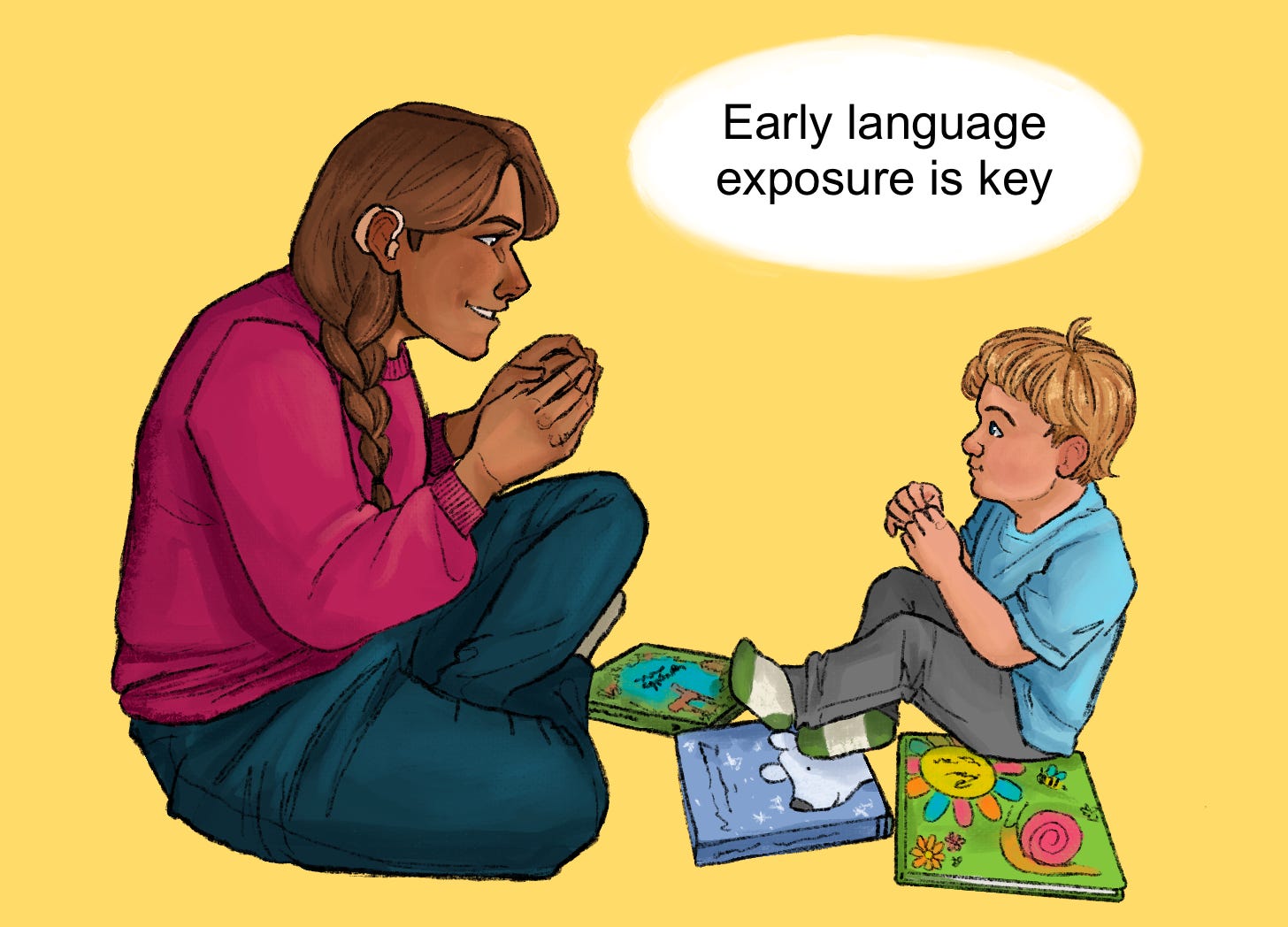
VC: Hearing disorders might be present at birth, and it’s been a huge help for newborn hearing screenings to become pretty standard across the nation, because that helps catch any deafness or hard of hearing condition in young children. Our field is building awareness of the importance of starting sign language early. We often recommend that people start learning and using American Sign Language as soon as possible, because infants should be exposed to language [as soon as possible]. Some kids have progressive hearing loss that is developing over time, so there are regular hearing screenings for all public school children to identify undiagnosed hearing deficits.
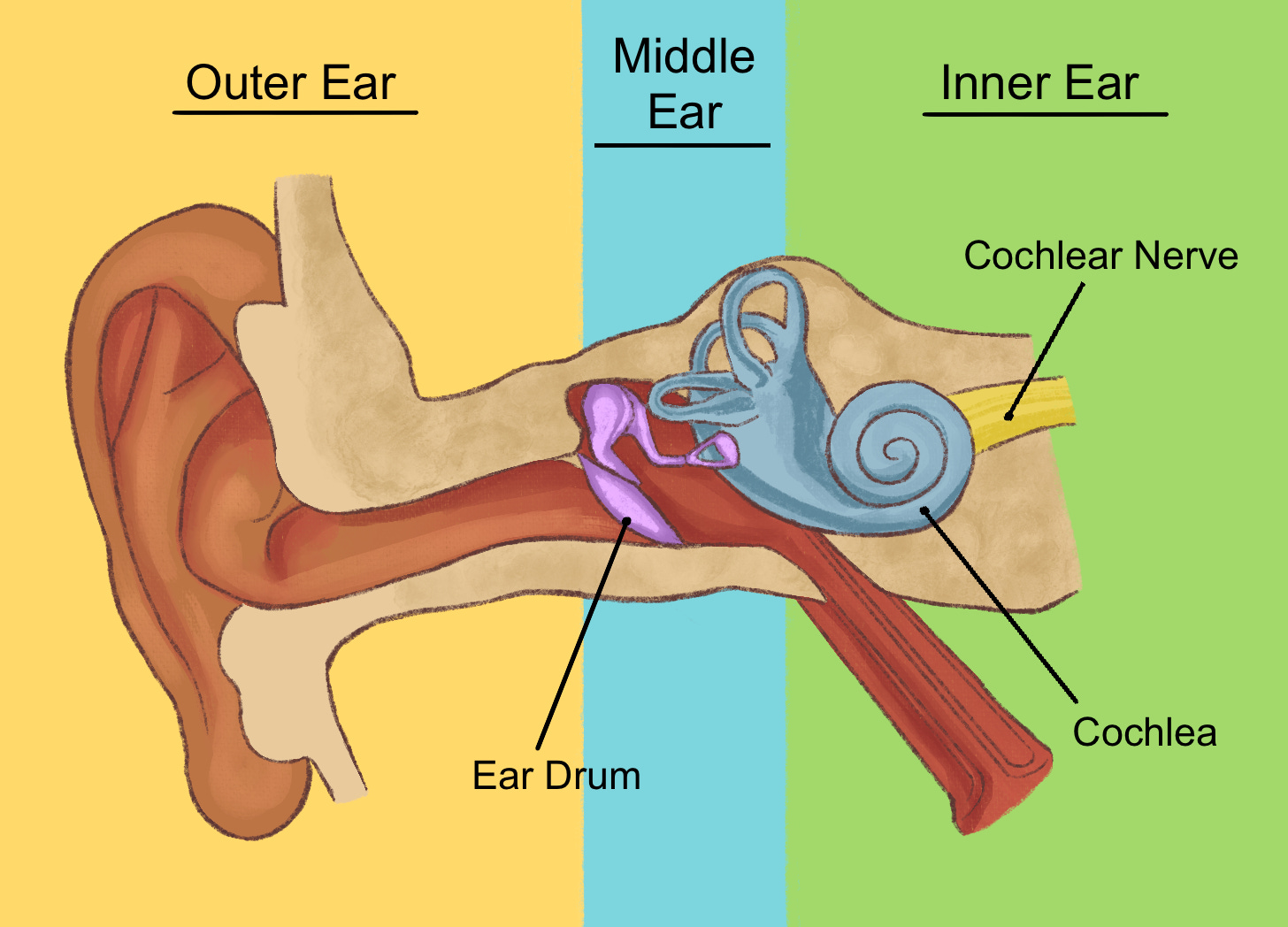
A big cause of hearing loss or delay in language is kids that have repeated ear infections. Because those infections cause fluid in the middle ear, they’re hearing everything like it’s underwater, and they might not be talking on time. Sometimes the eardrum fills with fluid and gets perforated because there’s an infection that has swollen and burst the eardrum. Addressing the ear infections and fluid behind the eardrums will allow children to hear speech sounds clearly so they can progress in their comprehension and speech.
Then there [is] acquired hearing loss for different reasons. Sometimes, sudden loud noise right next to the ear could cause cetemporary or permanent hearing loss, and repeated exposure to loud noise can also [cause damage] over time.
MM: What are some of the most common hearing disorders?
VC: Hearing disorders are classified into two categories. One is in the inner ear, called sensorineural hearing loss. That’s anything that’s happening in the cochlea and up into the neural pathways to the brain.
The other type would be the middle ear or the outer ear. Those tend to be more treatable with medication or surgery. You can repair the middle ear disorders that might be due to an infection, accident, or a burst eardrum.
MM: Is there a reason that some children are “late talkers” or struggle to meet the usual speech or language benchmarks?
VC: There are a group of late talkers that simply start talking a little bit later, and they end up catching up. Other kids need specific support. When they’re not talking on time, you don’t know which group they belong to, so we really want to catch all of those kids and give them support. I would recommend [parents] go to the American Speech-Language-Hearing Association (ASHA) website—there are developmental, social, and communication milestones there.
I always encourage parents, if they are concerned about their child’s communication development, to get some kind of consultation or evaluation to rule out any concerns, because it will always be better to start earlier on therapy if it’s needed—the earlier you start, the less the child may need.
MM: Are there any other signs to look out for that may indicate a need for professional evaluation?
VC: Not saying recognizable words at about 12 months—when most children start saying words that are recognizable to other people. Before that, there’s a lot of babble that’s happening, and you should hear a lot of sounds within the child’s babble. I get really encouraged when I’m evaluating a child with a language delay if I see them using gestures like pointing, shrugging their shoulders, or waving hello and goodbye. Having that nonverbal communication is a really good sign that they are taking in quite a bit of the language around them.
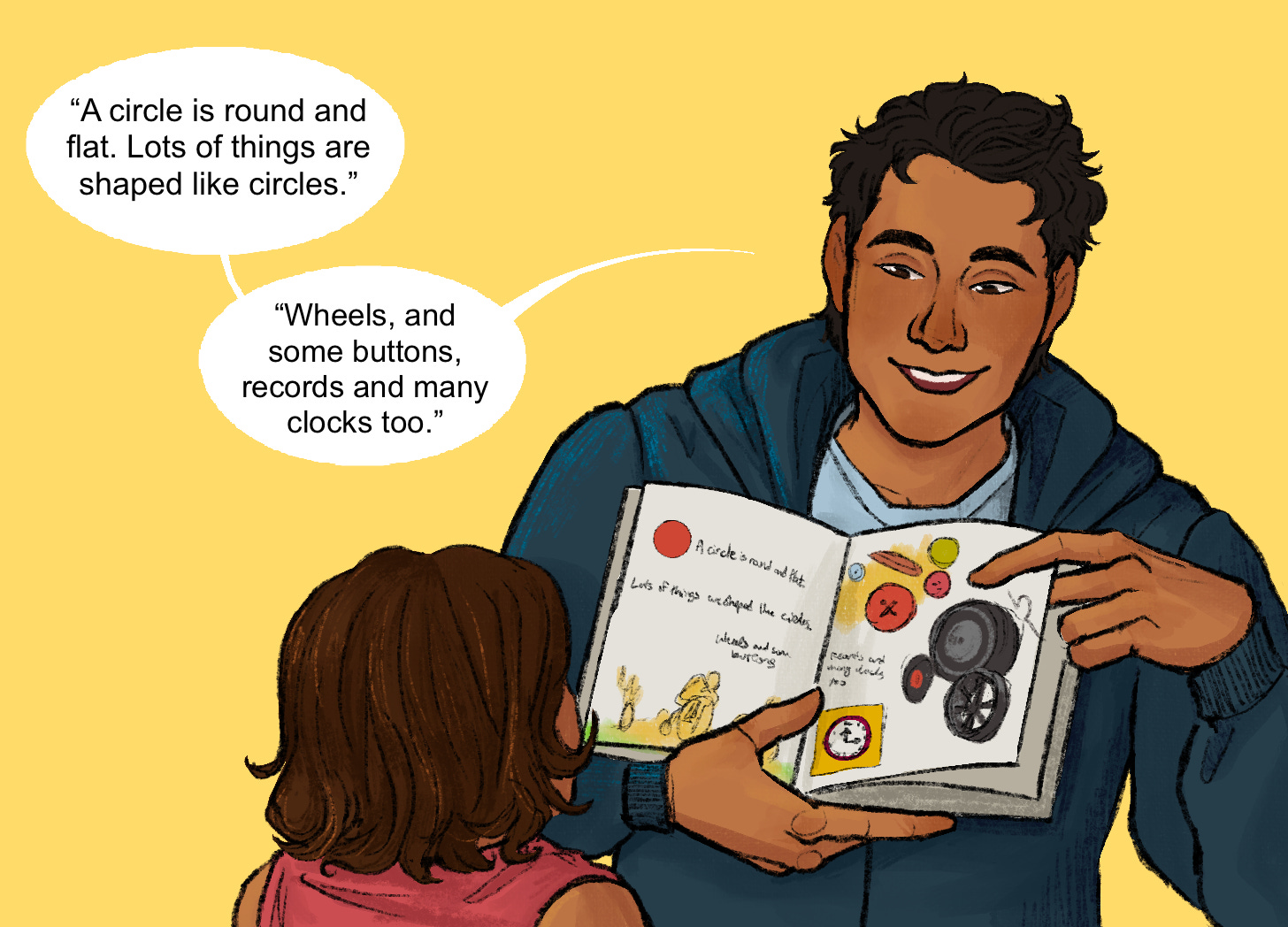
The number one thing I would recommend is engaging with books with kids. You don’t even have to read the text on the page, just talking about the pictures starts to expose them to a rich variety of vocabulary, and it sets up face-to-face time with an adult that [is] essential for language.
I would caution parents about depending on TV shows or videos as language stimulation. Even if it’s just 10 minutes a day that caregivers can sit and read with their child, that will be powerful.
MM: Sometimes parents can be discouraged from speaking a language other than English to their children, because they worry that the children might be confused. What does the research say about children’s ability to learn and distinguish between two different languages?
VC: Research shows parents should continue exposing their child to any languages that are relevant to their family needs or environment. That actually becomes a building block and a basis for learning English later. We always encourage families to continue to speak their first language with their child. I’ve seen kids with severe communication disabilities be very functional in two languages, and they’re able to participate in the communities that are relevant to their family life, which has a huge impact on their social and emotional well-being.
MM: Are there habits that can support healthy speech and hearing as we age?
VC: Making time to seek out information and help for communication concerns earlier rather than later is always recommended. For example, if you’re noticing that your voice is not working as well as it was—maybe you work in a profession where you speak a lot and you’re noticing a lot of coarseness and strain—a course of voice therapy can help you care for your voice differently and allow you to keep working.
A lot of people delay getting their hearing screened or tested if they are noticing that they’re not hearing as well as they used to, and the research shows that hearing loss is related to cognitive decline. If your brain can’t hear the difference between certain sounds, it will stop thinking it needs to, and it can be hard to recover that. More recently, research has connected hearing loss with dementia. It’s always worth getting checked out sooner rather than later, because often there are treatments or therapies that may help.
MM: One of the things that leads to that delay in evaluation is that so many of these conditions can be stigmatized. They’re often scary. How can we reduce stigma and increase access to information?
VC: Holding on to hope that if there is something that needs a diagnosis, there will be something you can do about it. Whether it’s therapy, medication, prevention, [or] habits you can change that can make a difference.
MM: What are some resources or organizations that provide assessments and care?
VC: Birth to 3 years old, look at the Arizona Early Intervention Program [or an early intervention program in your state]. Three to age 18, or even up to 22, schools offer an evaluation, and parents can request in writing if they have concerns about their child’s communication or progress in school.
Once you get into adult services, a referral [might be] available through your doctor. You can always look to things like the D[ivision] of Developmental Disabilities or the ALTCS program [in Arizona]. This would be for people with impactful disabilities that are continuing throughout their life, and they can often get therapies, free or low cost, to support that communication. And then sometimes you’re just approaching a private clinic and saying, This is my concern, I would like more support. Many times insurance does cover speech and language therapy.
MM: How can we create inclusive and accessible environments for people with speech or hearing differences?
VC: I’ve started to see communication boards in playgrounds, symbols that kids can point to that help them communicate some things about their play. Within schools, having students with disabilities that are part of the general education classrooms or activities has helped bring a better awareness to the public about the presence of people with all different types of abilities as part of our community.
People should not hesitate to do advocacy on an individual basis. Although we have laws that require that things be accessible, there’s no substitute for an individual speaking up and saying, This looks like it would be hard for someone to participate in. Asking the question, if there aren’t any people with disabilities participating in something—a sports team, a Scout troop, a theatrical production: Are there no people with disabilities here because they can’t access it? And if so, I wonder what would help them access it?
If you or a loved one is experiencing difficulties with speech or hearing, check out the ASU Speech and Hearing Clinic. They provide low cost and some free services and programs.
Well-Informed: Related stories from the ASU Media Enterprise archives
Terri Clark of Read on Arizona breaks down the top five tips for reading books with your toddler in this episode of First Things First’s Parents Playbook with Arizona PBS.
Well-Versed: Learning resources to go deeper
Lantern, a partner of Arizona PBS, delivers resources and information for parents of children with hearing loss directly through a free text message service. The resources, developed by health professionals in collaboration with parents, are tailored to children from birth to age 3.
Well-Read: News we’ve found useful this week
"Dementia Comes in Many Forms. Alzheimer’s Is Just One," by Dana G. Smith, Dec. 1, 2025, the New York Times
"Medicaid Work Rules Exempt the ‘Medically Frail.’ Deciding Who Qualifies Is Tricky," by Samantha Liss and Sam Whitehead, Dec. 1, 2025, KFF Health News
"A Smartphone Before Age 12 Could Carry Health Risks, Study Says," by Catherine Pearson, Dec. 1, 2025, the New York Times
Well-Defined: Word of the week
The exposome describes all the environmental factors someone is exposed to during their lifetime, and the impact of those exposures on their health. Because environmental exposures affect peoples’ health outcomes, to understand an individual’s health, you have to understand their context.
Just like someone’s genome—or genetic information—is complex and unique, so is their exposome. Factors that make up someone’s exposome include their job, diet, neighborhood, education, financial resources, physical activity, access to health care, ability to breathe clean air, and many others.
This term is an important tool to help us better understand why disease happens and how to prevent it.
Expert review provided by Ben Trumble, professor at the ASU School of Human Evolution and Social Change
Well-Engaged: How access to water affects your health
How many people in the U.S. lack access to running water or basic plumbing in their homes?
You can find the correct answer at the bottom of today’s newsletter. In the meantime, let’s talk about what it takes to get clean water to your faucet, and some strategies you can use to make sure your water is safe to drink.
For many people, accessing safe drinking water is as simple as turning on the tap in your kitchen. But for others, it can be time-consuming and costly. Water insecurity, or the scarcity of clean water and risk of contamination, affects individual and community health. Even if a community has drinking water infrastructure—including a water source, treatment to make it safe to drink, facilities to store it and pipes for transport—water-borne diseases or high concentrations of metals can raise concerns.
So, how can you be sure that your water is safe? The Environmental Protection Agency has a few guidelines for testing your water supply. Most people get their water from a public water system—if you pay a water bill, you do too. These suppliers are responsible for monitoring the safety of the water they’re delivering, and they must notify consumers if there are any concerns. Community water systems should also provide customers with annual water quality reports, called a consumer confidence report, which is usually received once a year in July.
If you have a private water supply—like a well—the EPA suggests testing your water at least once a year for major contaminants, and more frequently if you’re expecting a baby or notice something is off with the taste, smell, or appearance of your water. County health departments are often able to test your water supply for you. If this is not available in your area, state-certified labs can help as well.
Regardless of whether you get your water from a public or private supply, if you believe your household plumbing may have lead (for example, if you have plumbing fixtures from before 1986), you can request testing. Some water filters can also reduce lead.
Correct answer: 2.2 million people in the U.S. do not have running water in their homes
Expert review provided by Amber Wutich, Professor at the School of Human Evolution and Social Change
Do you have a question or topic you’d like us to ask an expert about? We want to hear from you.